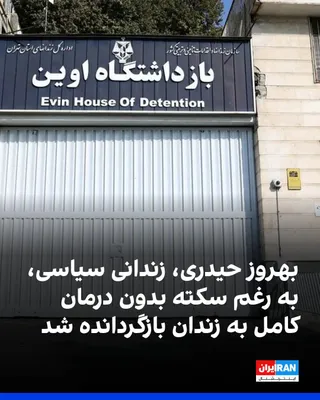

In Kرج, the Islamic Republic regime secretly carried out the first confirmed execution of a detainee from the 40-day war, executing political security prisoner Majtabi Kian in Qezel Hesar prison. This execution comes as the regime intensifies its crackdown on opponents amid external pressures and internal crises.
The article, addressed to the U.S. President, warns against supporting the Islamic Republic of Iran, stating that the regime has massacred over 40,000 protesters in two days and continues to commit atrocities against civilians demanding freedom and the restoration of the monarchy.
U.S. Senator Ted Cruz (R-TX) expressed concern over reports of a potential Iran deal, criticizing it as a "disastrous mistake" that would allow the Iranian regime to enrich uranium and develop nuclear weapons, while praising President Trump's military strikes against Iran during his second term as consequential and effective.
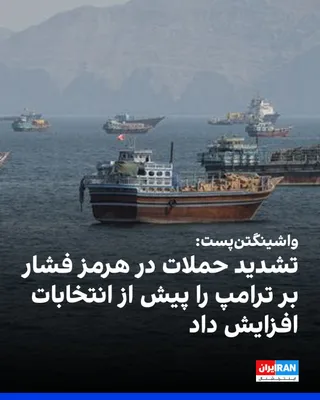
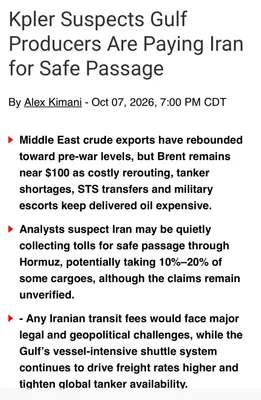
According to Iranian media, a US peace deal with Iran includes reopening the Strait of Hormuz under Iranian control, releasing billions in frozen Iranian funds, and ending the US naval blockade with the withdrawal of US forces from the region.
According to Fars News Agency, an IRGC-owned news outlet, Donald Trump's recent claim on "Truth Social" that the Strait of Hormuz has returned to its previous condition is unsubstantiated. Fars reports that any potential agreement will keep the strait under Iranian management, with Iran only agreeing to restore pre-war vessel traffic levels but not to "free passage."
According to Al Jazeera sources, Iran has proposed a draft that includes ending wars on all fronts, unfreezing Iranian funds, lifting the U.S. naval blockade, reopening the Strait of Hormuz, and withdrawing U.S. forces from the vicinity of Iran, with a 30-day deadline for finalizing a nuclear deal, extendable by mutual agreement. Iran also suggests joint management of the Strait with Oman.
Louisiana Governor Jeff Landry, serving as Trump's envoy to Greenland, stated that Greenland could be exporting 2 million barrels of oil daily, potentially relieving pressure in the Strait of Hormuz.
The U.S. informed Japan that the delivery of 400 Tomahawk missiles ordered by Japan could be delayed by up to two years due to the depletion of Pentagon stockpiles during the Iran war, with the U.S. prioritizing restocking its own arsenal. Japan had anticipated receiving the missiles by 2028 to counter Chinese military capabilities.
China and Russia have tripled their intelligence personnel in Cuba since 2023 to staff signals-intelligence facilities targeting U.S. military sites in Florida; China operates 3 out of 18 known sites, while Russia runs 2, with primary targets being CENTCOM in Tampa and SOUTHCOM near Miami.
Senator Lindsey Graham stated that if a deal ends the Iranian conflict due to Iran's perceived ability to disrupt the Strait of Hormuz and damage Gulf oil infrastructure, Iran would be seen as a dominant regional power, potentially leading to a diplomatic solution but posing significant challenges for Israel. Graham also expressed skepticism about Iran's capability to indefinitely terrorize the Strait and questioned the initial rationale for the war.
President Trump announced on January 10, 2026, that the likelihood of reaching an agreement with the Islamic Republic of Iran or resorting to military action is '50/50,' and that he will meet with senior advisors to decide on the final course of action by January 11.
In a sarcastic statement, US military analyst Rachel Hegseth addressed the U.S. military, saying, "I know the Army loves sinking the Navy, but for now, the only Navy you're allowed to sink is the Iranian Navy," amid escalating tensions and increased military presence in the Persian Gulf and Strait of Hormuz.
Asim Munir, Chief of Staff of the Pakistani Army, conveyed messages from the US government to the Iranian regime in Tehran, warning of potential military action if Iran does not agree to a deal. The messages also outlined severe consequences if Iran fails to accept the terms immediately.
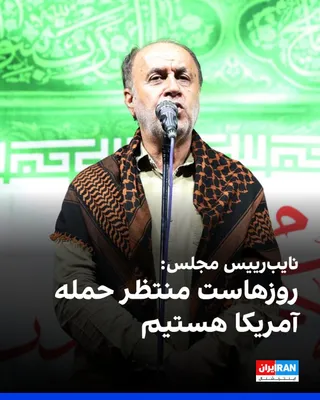
Reza Toghianpour, a member of the Iranian regime's parliament, claimed that the regime has the capability to disrupt a significant portion of the world's vital fiber optic cable network passing through the Strait of Hormuz and Bab al-Mandab, potentially causing widespread economic and security consequences globally.