Missile Strikes
Iranian strikes hit 16 US military sites, causing billions in damage - Crypto Briefing
Iranian forces conducted strikes on 16 US military sites, causing billions of dollars in damage.
0
Iranian forces conducted strikes on 16 US military sites, causing billions of dollars in damage.
Israel is preparing for a potential U.S. strike on Iran and a possible preemptive Iranian response, with the Israeli Chief of Staff contacting CENTCOM Commander Cooper to coordinate, according to Channel 12.
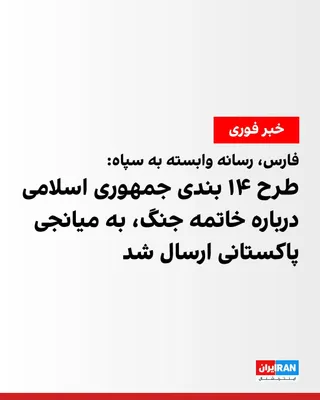
Fars News Agency, affiliated with the Islamic Revolutionary Guard Corps, reported that Iran has sent a 14-point response to the United States through Pakistan as an intermediary, in reaction to Washington's 9-point proposal regarding the end of the war. The message was prepared after going through Iran's conventional decision-making processes and obtaining necessary approvals from relevant institutions.
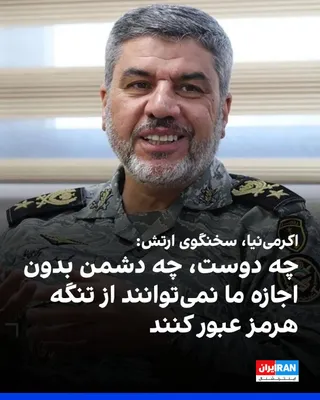
Mohammad Akrami-Nia, spokesperson for the Islamic Republic's army, stated that neither friend nor foe can pass through the Strait of Hormuz without permission, and warned that any enemy aggression would face new arenas and tools in war.
Iranian forces conducted strikes that damaged 16 US military sites across the Middle East.
According to a report by Middle East Monitor, Iran conducted strikes that damaged 16 US military sites in the Middle East.
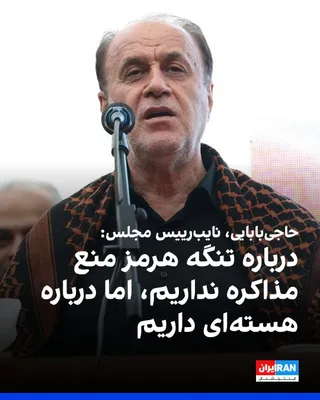
Hamideh Reza Haji Babai, Deputy Speaker of Iran's Parliament, stated that negotiations are possible regarding the Strait of Hormuz but prohibited concerning the nuclear issue, emphasizing that the war with America continues in various dimensions despite a temporary halt in missile attacks. He also highlighted the importance of addressing the matter of maritime blockade.
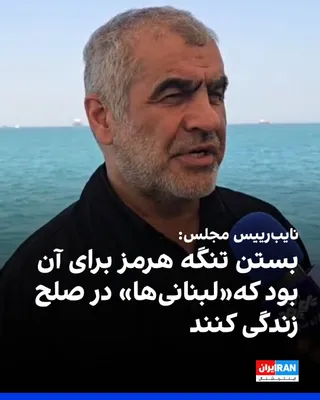
Ali Nikzad, Deputy Speaker of the Islamic Consultative Assembly, told Al-Manar network that any negotiation condition for the Islamic Republic includes a complete halt to attacks on Lebanon, emphasizing the unity between Iran and Hezbollah.

The Israeli Defense Forces (IDF) published footage on December 14, 2025, of an airstrike conducted against an armed Hezbollah rocket launcher in southern Lebanon.
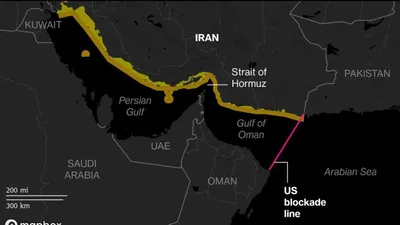
The U.S. naval blockade in the Gulf of Oman has cost Iran $4.8 billion in oil revenue since mid-April, with more than 30 tankers stranded at sea and dozens of ships turned away. Some shipments are still reaching China via longer and riskier routes.
Ali Nikzad, Deputy Speaker of the Islamic Consultative Assembly, has announced the drafting of a new law for the Strait of Hormuz, which will restrict passage for ships from Israel and "hostile countries, primarily the United States," while ensuring safe passage for others and considering the rights of neighboring countries.

Qatar's Foreign Minister, Mohammed bin Abdulrahman Al Thani, in a phone call with Iran's Foreign Minister Abbas Araghchi, warned that closing the Strait of Hormuz or using it as a bargaining tool would deepen the crisis and jeopardize regional interests, emphasizing the non-negotiable nature of freedom of navigation.
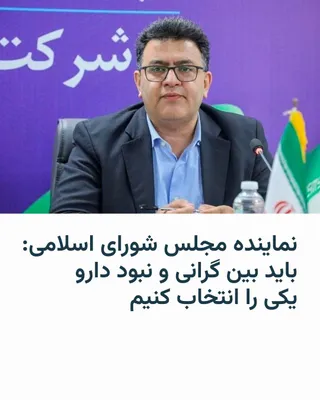
On Saturday, May 2, a member of Iran's Parliament Health and Treatment Commission acknowledged the recent increase in medicine prices and shortages, citing the ongoing war and the need to choose between higher prices and limited availability. The parliament member emphasized the necessity of price hikes to sustain production and called for insurance coverage to mitigate the financial burden on citizens.

On Saturday, May 2, Kazem Gharibabadi, Deputy for Legal and International Affairs of the Islamic Republic's Foreign Ministry, met with foreign ambassadors in Tehran to discuss Iran's proposed plan to end the conflict, which has been presented to Pakistan as mediator and now awaits a response from the United States. Reuters reported that Iran's proposal includes reopening the Strait of Hormuz and lifting the U.S. blockade, but postponing nuclear talks to a later stage, which was rejected by the U.S. due to "unacceptable conditions."
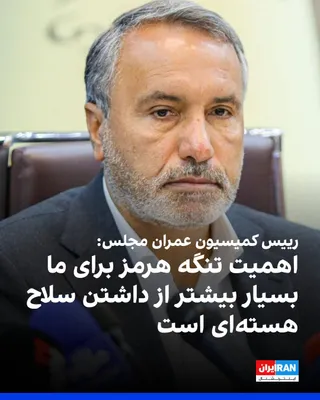
Mohammad Reza Razaei Kochi, head of the Parliament's Infrastructure Commission, stated during a visit to southern ports and the Strait of Hormuz that controlling the Strait is more crucial than possessing nuclear weapons, and all ships in the region require permission from the Islamic Republic to navigate through it.

Russian President Vladimir Putin is seeking a temporary ceasefire to be implemented on May 9th due to concerns over Ukraine's advanced drone capabilities.
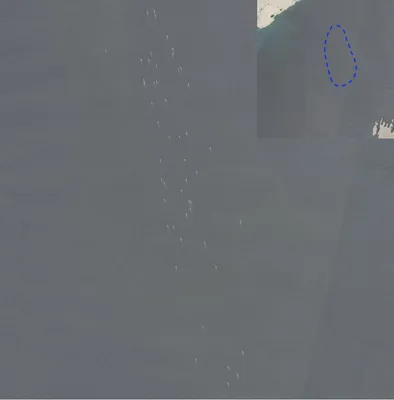
Satellite imagery on the date of the report shows several dozen Iranian gunboats operating in the middle of the Strait of Hormuz, north of Oman, likely engaged in mine-laying or patrol activities.
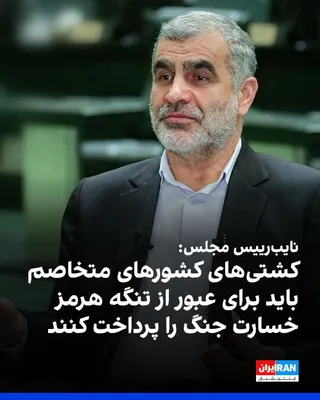
Ali Nikzad, the Deputy Speaker of Iran's Parliament, stated that according to the parliament's plan, ships from hostile countries, including Israel, will be prohibited from passing through the Strait of Hormuz if they do not pay war damages, while other vessels will transit according to existing laws and with permission from the Islamic Republic.
A social media post by Babak Taghvaee accuses a figure referred to as "Qarmasagh" of being an infiltrator, criticizing Manoochehr Bakhtiari and the mother of Sattar Beheshti for similar behavior. The post also expresses disappointment in Prince Reza Pahlavi for not addressing the alleged infiltration more strongly.

According to Bloomberg, citing a senior Iranian official, Iran has reduced crude oil production due to a decline in exports caused by the U.S. maritime blockade around the Strait of Hormuz, leading to a buildup of oil in storage facilities.