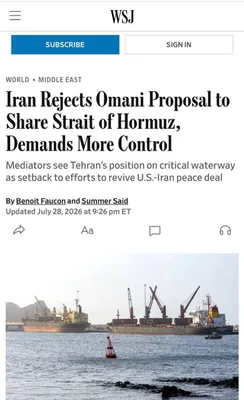
International Response@✡︎𝐋𝐢𝐯𝐞𝐈𝐫𝐚𝐧𝐍𝐞𝐰𝐬🇮🇷🇮🇱: 🚨🌍🇴🇲🦀 Wall Street Journal: Islamic Republic Rejects Oman's Proposal for Joint Management of Strait of Hormuz The Wall Street Journal reported that the occupying regime of the Islamic Republic haJul 29, 20260Czytaj więcej
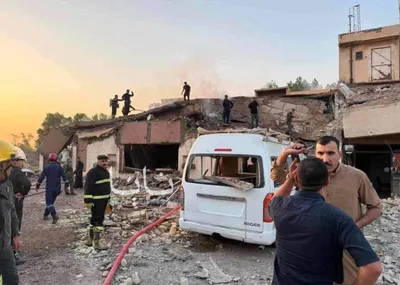
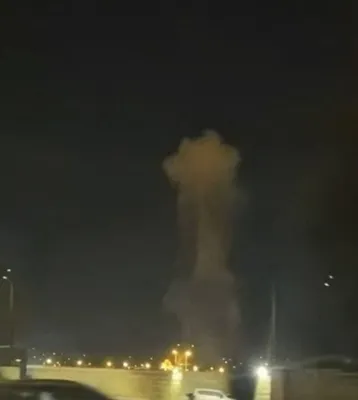
Eyewitness Reports@✡︎𝐋𝐢𝐯𝐞𝐈𝐫𝐚𝐧𝐍𝐞𝐰𝐬🇮🇷🇮🇱: 🚨🇺🇸🇸🇦🦀🇮🇶 New images have been released of the bombing of the headquarters of the 24th Brigade of the Islamic Republic's Popular Mobilization Forces terrorist group in Diyala The newly releaseJul 29, 20260Czytaj więcej
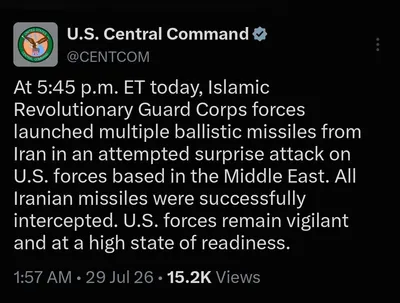
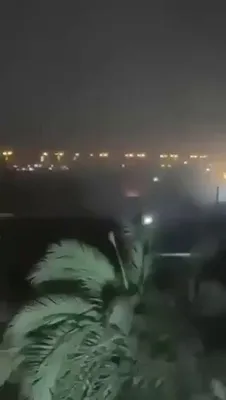
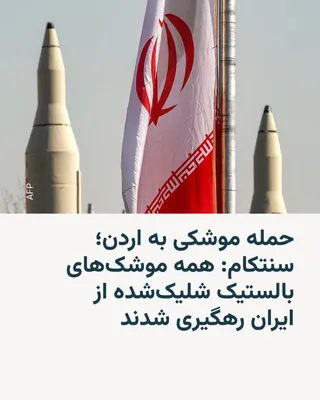
Protests@✡︎𝐋𝐢𝐯𝐞𝐈𝐫𝐚𝐧𝐍𝐞𝐰𝐬🇮🇷🇮🇱: 🚨🇺🇸🦀🇯🇴 سنتکام: همه موشکهای شلیکشده از ایران به سمت پایگاههای آمریکا رهگیری و منهدم شدند سپاه پاسداران بامداد امروز با شلیک موشکهای بالستیک از چندین نقطه ایران، پایگاههای آمریکا در اردن را Jul 29, 20260Czytaj więcej
Breaking News@Babak Taghvaee - The Crisis Watch: BREAKING: Multiple bases belonging to Kataib Hezbollah and Kataib Sayyid al-Shuhada of the Iraqi Hashd al-Shaabi (Iraqi proxies of the IRGC terrorist organization) were targeted in joint airstrikes byJul 29, 20260Czytaj więcej
Protests@✡︎𝐋𝐢𝐯𝐞𝐈𝐫𝐚𝐧𝐍𝐞𝐰𝐬🇮🇷🇮🇱: 🚨🇮🇷🦀🇺🇸🇯🇴 The occupying regime of the Islamic Republic has claimed responsibility for the missile attack on the U.S. airbase in Jordan and the assault on three vessels in the Strait of Hormuz Jul 29, 20260Czytaj więcej
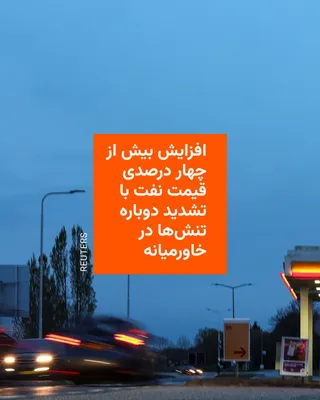
Protests@RadioFarda|راديو فردا: قیمت نفت روز چهارشنبه پس از ازسرگیری درگیریها در خاورمیانه و افزایش نگرانیها درباره انتقال انرژی از تنگه هرمز، بیش از چهار درصد افزایش یافت. تا حدود ساعت ۱۵ دقیقه بامداد به وقت گرینویچ، بهای نفت خاJul 29, 20260Czytaj więcej
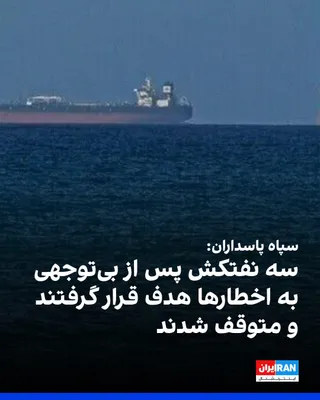
International Response@ايران اينترنشنال: The IRGC Navy, emphasizing the continuation of "full management operations" over the Strait of Hormuz, announced that it had targeted and halted three oil tankers that were moving along an "unsafe andJul 29, 20260Czytaj więcej
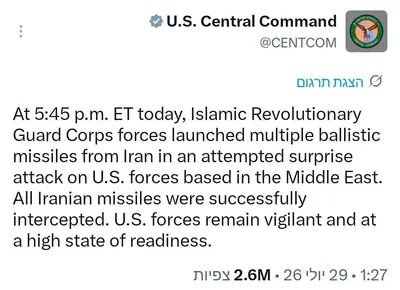
International Response@RadioFarda|راديو فردا: CENTCOM, the U.S. Central Command, posted on the X network in the early hours of Wednesday, August 7 (Iran time): "At 5:45 p.m. Eastern Time today, the Islamic Revolutionary Guard Corps forces attemptJul 29, 20260Czytaj więcej
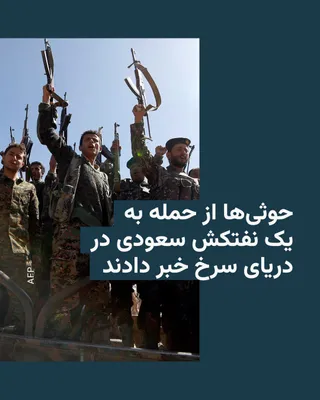
International Response@RadioFarda|راديو فردا: Yemeni Houthi rebels announced on Tuesday that they had targeted a Saudi oil tanker with ballistic missiles in the Red Sea, citing what they called a "violation of the blockade of Saudi ports." The HJul 29, 20260Czytaj więcej
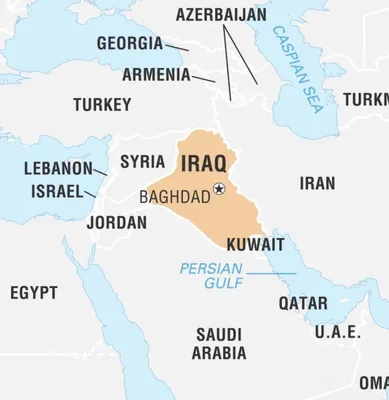
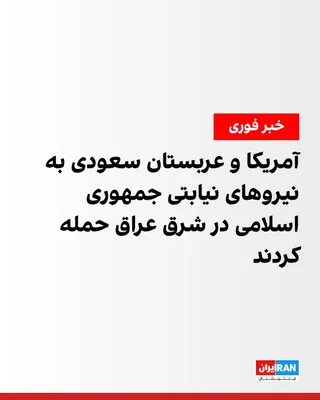
Breaking News@Visegrád 24: BREAKING: U.S. and Saudi fighter jets launch joint airstrikes against PMU (Iranian proxy) forces in Iraq. The strikes come after PMU launched drone attacks against energy facilities in Saudi Arabia.Jul 29, 20260Czytaj więcej
International Response@Shin: From the secondary explosions in Basrah as a result of RSAF-USAF strike on IRGC-backed PMU site, presumably an ammunition depot #Iraq 🇮🇶Jul 29, 20260Czytaj więcej
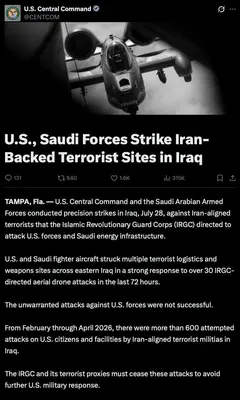
Economy@Shin: . @CENTCOM: U.S. Central Command and the Saudi Arabian Armed Forces conducted precision strikes in Iraq, July 28, against Iran-aligned terrorists that the Islamic Revolutionary Guard Corps (IRGC) dirJul 29, 20260Czytaj więcej
International Response@ايران اينترنشنال: The U.S. Central Command, CENTCOM, announced that U.S. and Saudi Arabian military forces carried out precise strikes in Iraq on Wednesday against "terrorist forces" aligned with the Islamic Republic, Jul 29, 20260Czytaj więcej
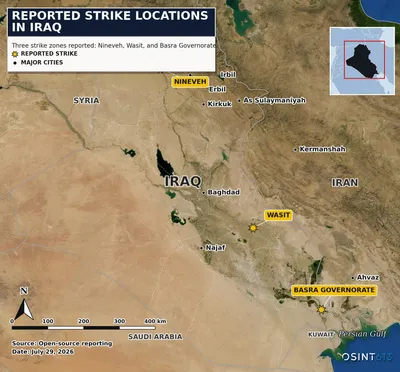
Economy@Open Source Intel: So far, according to our reporting, the following Iran backed militias have been struck in joint U.S. and Saudi Arabian airstrikes across Iraq: • Nineveh Governorate, Iraq • Wasit Governorate, centraJul 29, 20260Czytaj więcej
International Response@Open Source Intel: The strikes on Iran do very little to move the needle. The naval blockade is what is choking the regime. If the U.S. starts targeting banks, the resulting bank run in Iran could be disastrous. As foJul 28, 20260Czytaj więcej
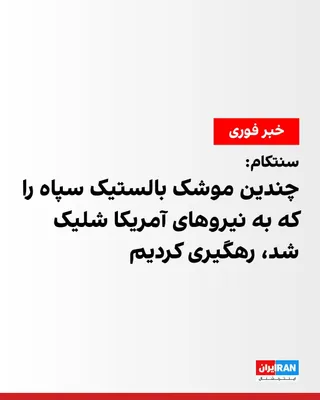
International Response@ايران اينترنشنال: The U.S. Central Command, CENTCOM, announced that the IRGC fired several ballistic missiles from Iran at 1:15 a.m. Tehran time on Wednesday in an attempt to launch a surprise attack on American forcesJul 28, 20260Czytaj więcej
Protests@Open Source Intel: Preliminary: Image of a debris hit on Muwaffaq Al Salti air base in Jordan. UPDATE: CENTCOM says all missiles were interceptedJul 28, 20260Czytaj więcej
International Response@U.S. Central Command: At 5:45 p.m. ET today, Islamic Revolutionary Guard Corps forces launched multiple ballistic missiles from Iran in an attempted surprise attack on U.S. forces based in the Middle East. All Iranian missJul 28, 20260Czytaj więcej
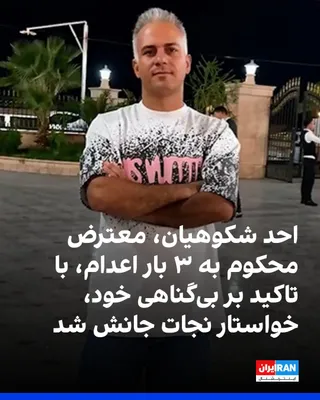
Protests@ايران اينترنشنال: احد شکوهیان، معترض ۳۸ ساله بازداشتشده در اعتراضات دیماه ۱۴۰۴ که با حکم قاضی ایمان افشاری در شعبه ۲۶ دادگاه انقلاب تهران به سه بار اعدام محکوم شده است، در یک فایل صوتی از زندان قزلحصار کرج با تاکید بJul 28, 20260Czytaj więcej
Protests@✡︎𝐋𝐢𝐯𝐞𝐈𝐫𝐚𝐧𝐍𝐞𝐰𝐬🇮🇷🇮🇱: 🚨🦀 طبق گزارشات علیرضا سپاهی، محکوم به اعدام پرونده میدان علیخانی، پس از سکته قلبی در بیمارستان الزهرا اصفهان بستری شد علیرضا سپاهی، از زندانیان سیاسی پرونده میدان علیخانی که بنا بر گزارشها قرار بوJul 28, 20260Czytaj więcej