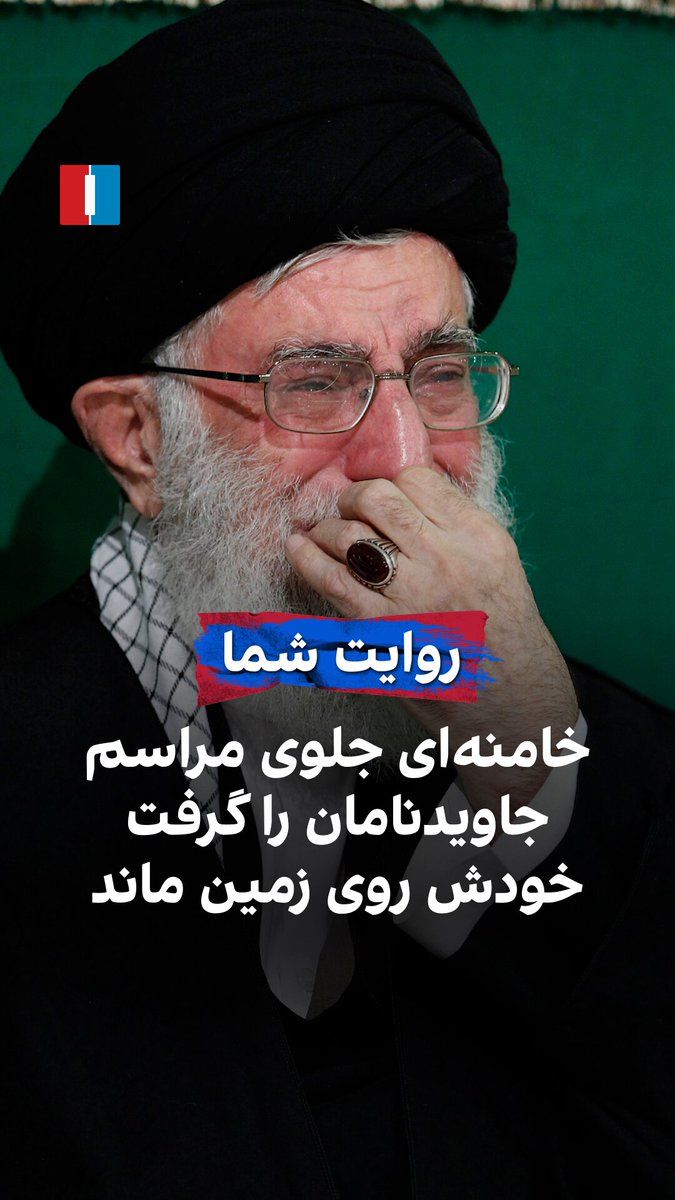
A citizen messaging Iran International noted that Ayatollah Khamenei's body remains unburied more than three months after his death, drawing parallels to his past restrictions on public mourning for protesters and other "immortal martyrs."

A citizen messaging Iran International noted that Ayatollah Khamenei's body remains unburied more than three months after his death, drawing parallels to his past restrictions on public mourning for protesters and other "immortal martyrs."

Fars News Agency, affiliated with the Islamic Revolutionary Guard Corps, reported that a Qatari delegation is currently in Tehran conveying the Islamic Republic's positions to the American side, with no negotiation topics finalized. The source added that even if all demands are accepted by the deadline set by former US President Donald Trump, no agreement will be signed, hours before Israel's attack on Beirut's Dahiyeh.
On Sunday, June 14, Israeli airstrikes hit Beirut's Dahiyeh district, killing Hezbollah commander Ali al-Haj and three other people, according to Al Arabiya and Lebanon's Civil Defense. Additionally, the Israeli army conducted three airstrikes in Saida, southern Lebanon, in response to Hezbollah launching three drones toward northern Israel.
Jamshid Barzgar, a journalist and political analyst, commented that the Islamic Republic's delay in announcing Ali Khamenei's death reflects its tradition of controlling news dissemination. Ali Bagheri Kani, deputy secretary of the Islamic Republic's National Security Council, stated on television that Ali Khamenei was killed in the initial moments of the attack.
Mahmoud Nabavian, a member of Iran's Parliament National Security Commission, posted on X that the current agreement text with the United States is more damaging and requires greater concessions from Iran compared to previous versions. On the sixth of Khordad, he questioned why Iran should address nuclear issues following the U.S. attack and the death of Khamenei.