Mohammad Ali Jafari, former commander-in-chief of the Islamic Revolutionary Guard Corps, stated in an interview with Tasnim News Agency that Iran will not proceed with further negotiations until its five main conditions are met: the end of war on all fronts, lifting of sanctions, release of frozen funds, compensation for war damages, and recognition of Iran’s sovereignty over the Strait of Hormuz. Advertising billboards in Tehran display these same conditions.

Anonymous SubmissionTehran, Tehran
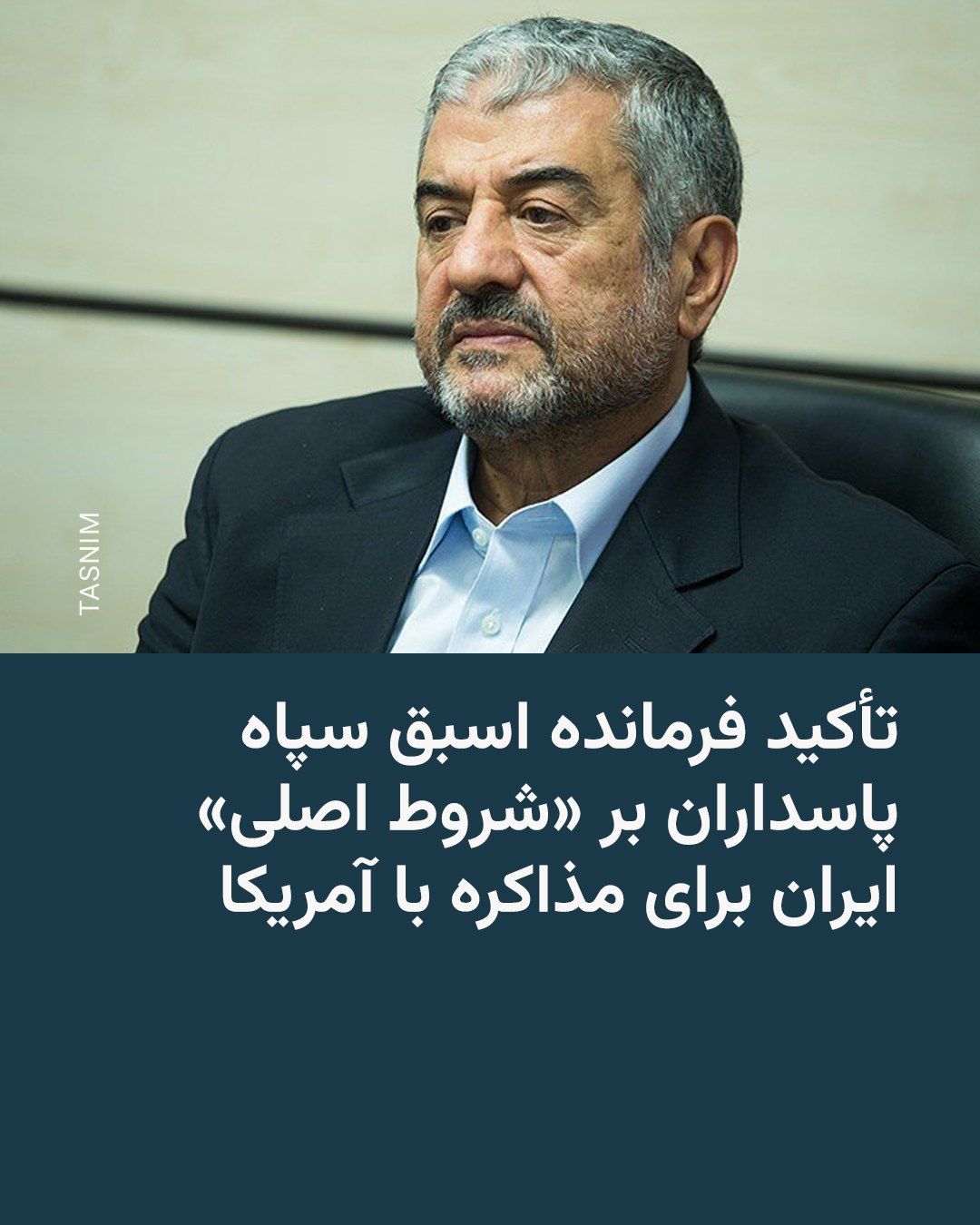
@RadioFarda‌|‌راديو فردا: Mohammad Ali Jafari, the former commander-in-chief of the Islamic Revolutionary Guard Corps, stated in an interview with Tasnim News Agency, affiliated with the IRGC, emphasizing what he called Iran’s

@RadioFarda‌|‌راديو فردا: Mohammad Ali Jafari, the former commander-in-chief of the Islamic Revolutionary Guard Corps, stated in an interview with Tasnim News Agency, affiliated with the IRGC, emphasizing what he called Iran’s

0
Source:x.com
Sources

Share

Related Articles

@RadioFarda‌|‌راديو فردا: The President of the United States stated on Friday, May 15, that he had spoken with Xi Jinping, President of China, about Iran, and that both sides agree Iran should not possess nuclear weapons and a
International Response

@RadioFarda‌|‌راديو فردا: The President of the United States stated on Friday, May 15, that he had spoken with Xi Jinping, President of China, about Iran, and that both sides agree Iran should not possess nuclear weapons and a

On Friday, May 15, U.S. President Donald Trump spoke with Chinese President Xi Jinping about Iran, agreeing that Iran should not acquire nuclear weapons and emphasizing the need to reopen the Strait of Hormuz. China’s Foreign Ministry stated opposition to the conflict with Iran and pledged to refrain from sending military equipment to Tehran while seeking to increase oil purchases from the U.S.

0
Read more
@Open Source Intel: Iran FM, Araghchi: 

The most important problem of dialogues is the contradictory messages we receive from the Americans through comments, interviews and different positions.

We are not to blame for
International Response

@Open Source Intel: Iran FM, Araghchi: The most important problem of dialogues is the contradictory messages we receive from the Americans through comments, interviews and different positions. We are not to blame for

Iranian Foreign Minister Hossein Amirabdollahian, also known as Araghchi, stated that the primary issue in dialogues is the inconsistent messaging from the United States. He also asserted that Iran is not responsible for the tensions in the Strait of Hormuz and emphasized that the strait remains open for friendly nations, requiring only coordination with Iranian military forces for passage.

0
Read more
@ایران وایر: .

Mohammad Ali Jafari, the former commander-in-chief of the Islamic Revolutionary Guard Corps, emphasized a set of what he called "Iran's main conditions for negotiations with America" in an intervie
International Response

@ایران وایر: . Mohammad Ali Jafari, the former commander-in-chief of the Islamic Revolutionary Guard Corps, emphasized a set of what he called "Iran's main conditions for negotiations with America" in an intervie

In an interview with Tasnim News Agency, former Islamic Revolutionary Guard Corps commander-in-chief Mohammad Ali Jafari outlined Iran's conditions for negotiations with the United States, including the lifting of sanctions, release of blocked funds, compensation for war damages, and recognition of Iran's sovereignty over the Strait of Hormuz, stating that meaningful negotiations cannot proceed until these conditions are met.

0
Read more
@اتاق خبر منوتو: The Abu Dhabi government media office announced on Friday, May 15, that the United Arab Emirates is accelerating the construction of a new oil pipeline to boost exports via the Fujairah route.

This p
International Response

@اتاق خبر منوتو: The Abu Dhabi government media office announced on Friday, May 15, that the United Arab Emirates is accelerating the construction of a new oil pipeline to boost exports via the Fujairah route. This p

On Friday, May 15, the Abu Dhabi government media office announced that the United Arab Emirates is accelerating the construction of a new oil pipeline to double the country's oil export capacity via the Fujairah route by 2027, allowing tankers to bypass the Strait of Hormuz.

0
Read more