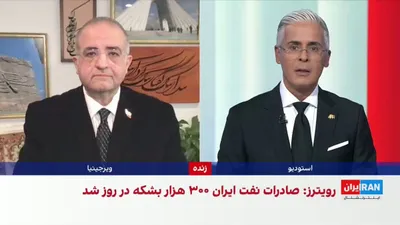
Ruhollah Rahimpour, a journalist and political analyst, stated that the Islamic Republic will continue to block the Strait of Hormuz as long as it views this action as a strategic advantage, even if it risks provoking a larger conflict.

Ruhollah Rahimpour, a journalist and political analyst, stated that the Islamic Republic will continue to block the Strait of Hormuz as long as it views this action as a strategic advantage, even if it risks provoking a larger conflict.

The U.S. Senate voted 50 to 47 against restarting consideration of a resolution to limit former President Donald Trump's war powers regarding Iran, with one abstention. This decision prevents the bill from being placed back on the Senate's agenda.
Morad Vaisi, Senior Analyst at Iran International, stated that evidence suggests the Islamic Republic remains unstable and insecure despite the end of the war, citing the four-month delay in burying Ali Khamenei, secrecy around the new leader Mojtaba Khamenei, and the closure of parliament. Vaisi questions whether Mojtaba will attend his father's funeral and speculates about potential safe conduct from the U.S. for him.
On Wednesday, global oil prices continued to decline, with Brent crude falling below $75 per barrel for the first time since the start of the conflict, while U.S. West Texas Intermediate crude dropped below $70 per barrel. According to shipping data, traffic through the Strait of Hormuz has increased but remains at one-third of pre-war levels, as stipulated by the Iran-U.S. memorandum of understanding.