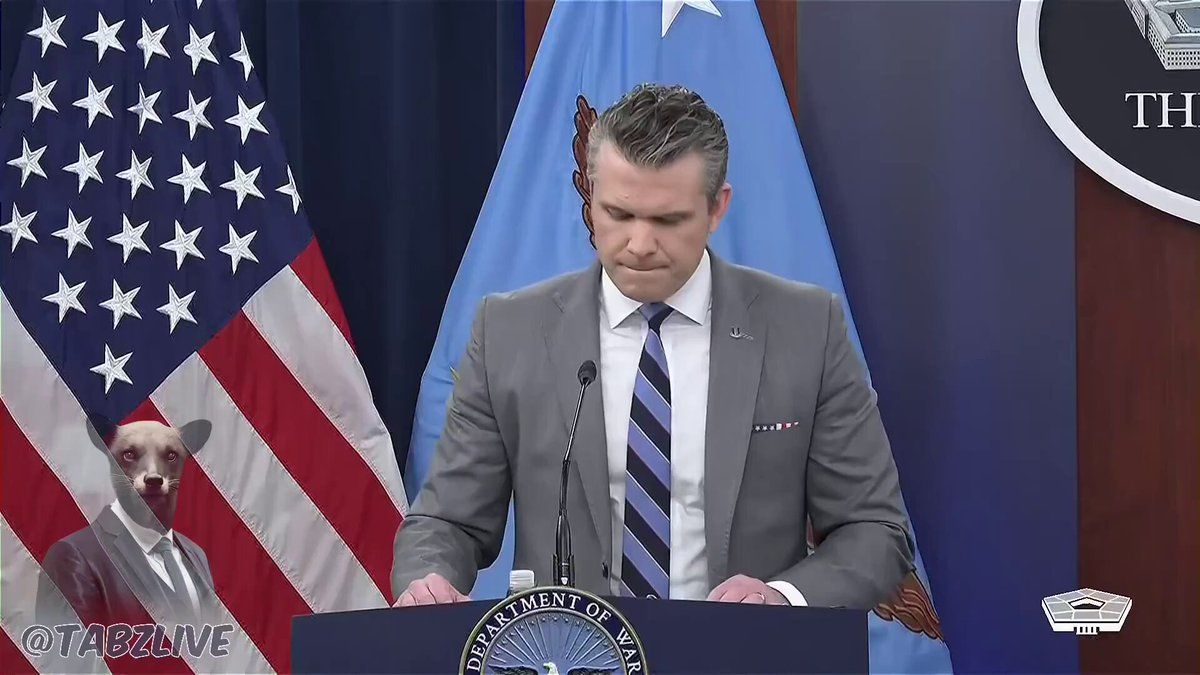
Secretary of War Pete Hegseth stated that the conflict in the Strait of Hormuz should not be solely America's responsibility, noting that the U.S. has minimal reliance on the strait for energy and possesses ample domestic energy resources.

Secretary of War Pete Hegseth stated that the conflict in the Strait of Hormuz should not be solely America's responsibility, noting that the U.S. has minimal reliance on the strait for energy and possesses ample domestic energy resources.

Secretary of War Pete Hegseth criticizes U.S. allies, stating "the time for free riding is over," and urges them to take more responsibility, particularly regarding the strategic importance of the Strait of Hormuz, during a speech where he emphasized the need for capable and loyal allies.
Hezbollah launched continuous rocket attacks in the northern part of the country in the last hour, ending the ceasefire.
Mohammad Bagher Ghalibaf, head of the Islamic Republic's negotiating delegation with U.S. representatives in Islamabad, has resigned after being reprimanded for attempting to include nuclear energy issues in the negotiation agenda.
Pete Hegseth, the U.S. Secretary of War, announced that the naval blockade on Iran's ports is intensifying, with another aircraft carrier set to join the operation soon. Hegseth stated that the blockade is now global, with the U.S. Navy seizing two Iranian ships in the Indo-Pacific and asserting control over all movements through the Strait of Hormuz.
Secretary of War Pete Hegseth: It's also worth saying this should not be America's fight alone. We barely use the Strait of Hormuz as a country. Our energy doesn't flow through there, and we have plenty of energy.