International Response
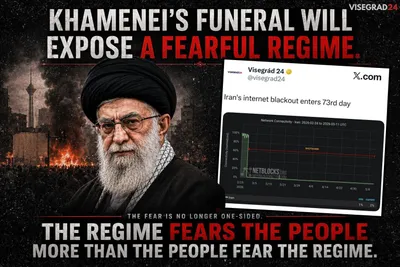
@Visegrád 24: As the Islamic regime in Iran prepares to bury the Islamist dictator Ayatollah Khamenei, the weakened regime is also increasingly fearful and unstable. It has implemented nationwide internet blackou
0

Hezbollah launched 63 rockets at the Israel Defense Forces (IDF) in the last 48 hours, despite a ceasefire, indicating that a withdrawal by Israel is unlikely until Hezbollah disarms or clears southern Lebanon of its fighters and infrastructure.
Eighteen people died in strikes in Lebanon, according to reports, while Israel announced that four of its soldiers were killed in the same conflict.
On June 19, Israel’s military struck targets throughout southern Lebanon, leading to intense fighting with Hezbollah, as tensions rise amid the fallout between the US and Iran over their recent agreement.
A source in Pakistan's Foreign Ministry told Qatar's Al-Arabi Al-Jadid that Israeli operations in Lebanon are straining U.S.-Iran understandings and that the U.S. is responsible for pressuring Israel to halt its bombing and withdraw. The planned U.S.-Iran meeting in Switzerland has been postponed due to disagreements over the agenda and unresolved issues.

Overnight, Israeli Defense Forces conducted airstrikes targeting more than 80 Hezbollah positions across southern Lebanon and the Bekaa Valley in response to repeated ceasefire violations.
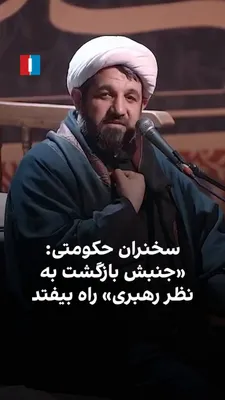
Ismail Ramazani, a government speaker, reacted to Mojtaba Khamenei's message regarding a memorandum of understanding with the United States, calling for a "Movement to Return to the Leader's View" and urging protesters to reject the agreement within 60 days.
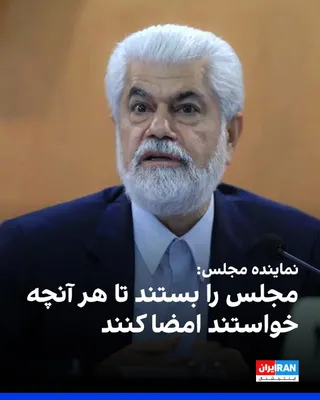
Hossein-Ali Shahriari, head of the Health and Treatment Commission of the Islamic Republic's parliament, stated that the parliament remains closed to prevent hasty approvals, emphasizing that any agreement with the United States must be thoroughly vetted and approved by the parliament. He also criticized Foreign Minister Abbas Araghchi's comments on diluting enriched uranium, asserting that the nuclear issue is a "red line" for the Islamic Republic.
Between June 17 and June 18, Hezbollah conducted 25 separate attacks on Israel, including 63 rockets, 1 missile, 7 explosive UAV attacks, 2 IED attacks, and 1 terrorist infiltration attempt involving 5 operatives, totaling 72 munitions and attack events over 48 hours.
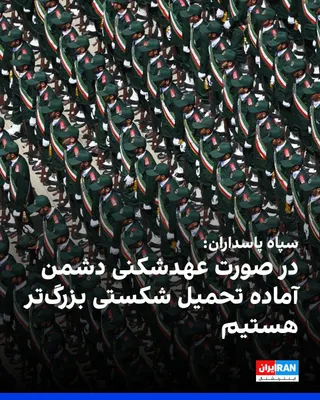
The Islamic Revolutionary Guard Corps (IRGC) issued a statement in support of Mojtaba Khamenei, leader of the Islamic Republic, endorsing his efforts to pursue the rights of the Islamic Republic and warning of a military response if there is a breach of the memorandum of understanding with the United States. The IRGC also emphasized its readiness to defend against any perceived threats from the "enemy" across all domains of warfare.
Ali Shirazi, a member of the Iran International editorial team, commented that Mojtaba Khamenei is avoiding responsibility for the memorandum of understanding, similar to how his father avoided responsibility for the JCPOA agreement, by attributing it to Masoud Pezeshkian and members of the Supreme National Security Council.
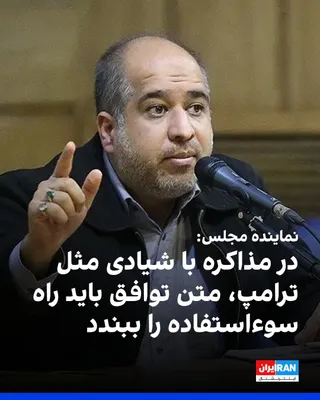
Ali Khodrian, a member of the Islamic Republic's Parliament National Security Commission, stated that despite his own reservations, the nation supports the leadership's approval of a memorandum issued by Mojtaba Khamenei. Khodrian warned that any new agreement with the United States must prevent unilateral restrictions and safeguard Iran's deterrent capabilities to avoid repeating the shortcomings of the JCPOA.
Mojtaba Khamenei, w odpowiedzi na porozumienie z Stanami Zjednoczonymi, stwierdził, że ma inny punkt widzenia, ale zgodził się podpisać je ze względu na zobowiązanie Masouda Pezeshkiana, szefa rządu i Najwyższego Rady Bezpieczeństwa Narodowego. Kamyar Bahram, członek zarządu Iran International, zauważył, że Mojtaba Khamenei użył niejasnej terminologii, aby uniknąć ponoszenia odpowiedzialności i utrzymania podziałów wewnętrznego w rządzie.