@Eli Afriat 🇮🇱: The original ceasefire with Iran has ended. Where do you think the Middle East is headed?
The original ceasefire between the United States and Iran has ended, marking a significant escalation in tensions in the Middle East.
The United States Navy deployed the GARC unmanned surface vessel in the Persian Gulf to conduct maritime patrols and gather intelligence against the Islamic Republic of Iran's Navy, specifically targeting IRGC fast boats. This system has logged hundreds of hours of operations as part of U.S. maritime security efforts in the region.
Anthony Albanese, the Prime Minister of Australia, stated that the economic impact of the Iran war will worsen as the conflict continues, citing stranded ships in the Strait of Hormuz and supply chain disruptions affecting energy imports from the Middle East. Australia has secured additional diesel shipments from South Korea, Brunei, and Malaysia to mitigate the effects.
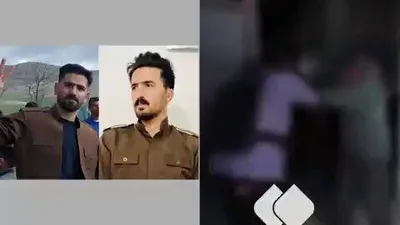
Asal Kazemi Far, a 24-year-old woman from Karaj, was killed by Iranian Revolutionary Guard Corps (IRGC) forces during protests.
President Trump announced on Truth Social that the Islamic Republic regime's threats to close the Strait of Hormuz are a facade, as the regime actually relies on the strait for daily revenue of about $500 million. He warned that severe pressures, including military options, are necessary to reach any agreement with the regime.
The Wall Street Journal reported, citing American officials, that former President Donald Trump recently asked his advisors about bombing Iran but decided to maintain the policy of sustained pressure on Tehran. Trump administration officials believe this approach can be effective and are prepared to continue it indefinitely until Iran presents a specific proposal for negotiations.
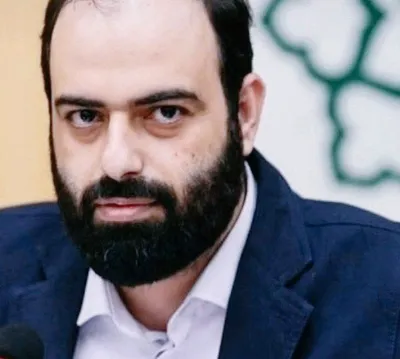
A video obtained by Iran International shows a citizen reporting an advertisement from the Khomenei Relief Committee requesting donations for the construction of a mausoleum for Ali Khamenei, despite the country's severe economic hardships.
President Donald Trump of the United States announced on Truth Social that the U.S. has implemented a naval blockade to completely block the Strait of Hormuz, asserting that the Islamic Republic is merely posturing about closing the strait to save face.
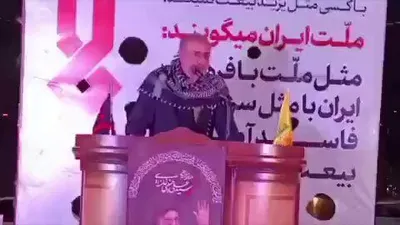
On the evening of Tuesday, April 20, 2025, the Islamic Revolutionary Guard Corps (IRGC) held missile displays in Tehran, Kerman, and Arak, alongside Hezbollah Lebanon flags, with supporters chanting "Death to Israel" and "Death to America." Reports indicate these displays occurred just before a ceasefire extension announced by then-US President Trump.
President of the United States Donald Trump posted on the social network "Truth Social" that Iran desires to keep the Strait of Hormuz open to earn $500 million daily, which it would lose if the strait were closed. Trump also stated that Iran's threat to close the strait is merely a response to America's blockade and that any further action would require targeting "the rest of their country, including their leaders."
Vrisheh Moradi, a 39-year-old Kurdish women’s rights activist, was sentenced to death in Iran and is currently held in Evin Prison, where she has been subjected to torture and solitary confinement; she faces charges of "rebellion" for her activism against the regime.
In a recent post, President Donald J. Trump claims that Iran wants the Strait of Hormuz open to earn $500 million daily and only mentions closing it to "save face" due to the strait being blockaded by the U.S. Trump states that opening the strait without further concessions from Iran would prevent a deal and potentially lead to military action against the country.
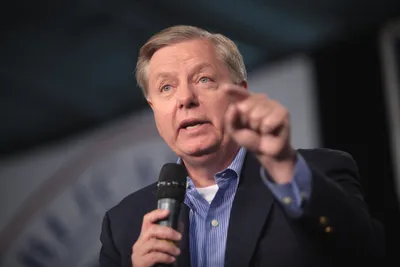
On Tuesday, Republican U.S. Senator Lindsey Graham defended the continuation of the siege against the Islamic Republic, calling it a "very smart decision" and emphasizing the need for Iran to completely remove highly enriched uranium and agree to permanent restrictions on its nuclear, drone, and missile programs, as well as curtail support for regional proxy forces.
The United States has implemented a naval blockade against Iran, significantly hindering the Islamic Republic's maritime operations and trade. This measure is described as highly detrimental to the Iranian regime.
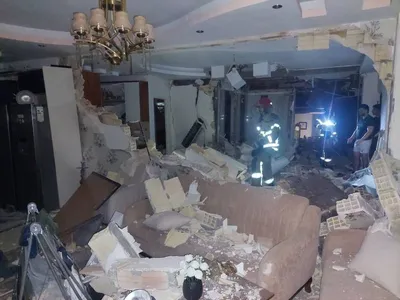
An explosion occurred in an unspecified location in Iran, reportedly targeting IRGC (Islamic Revolutionary Guard Corps) terrorists. The possibility of this incident marking the beginning of further actions is being considered.
Tasnim News Agency, affiliated with the Islamic Revolutionary Guard Corps, stated that Iran will not reopen the Strait of Hormuz as long as the United States maintains its maritime siege and may use force if necessary. The agency also claimed that the United States aims to keep the "shadow of war" and suspend Iran's economy and politics, noting Iran's control over the strategic waterway as a key difference from past conflicts.
Images and reports show that the Islamic Republic is giving real weapons to children under 12 years old at government gatherings, integrating them into paramilitary spaces, which is a violation of children's rights according to international law. Kambiz Hosseini discusses this issue in his "Program" on Iran International Television.
The 24-year-old Iranian student and computer technician Amirali Miriafari was hanged by the Islamic regime in Iran today. He was arrested during the anti-regime protests in January and accused of setting the Gholhak Grand Mosque in Tehran on fire.
US Treasury Secretary Scott Bennett announced on X that the country's navy will continue to blockade Iranian ports to target the Islamic Republic's main sources of revenue and weaken its financial capabilities through the "Economic Fury" program. He warned that individuals or vessels involved in such transfers will face US sanctions and emphasized the US commitment to blocking financial resources seized by Iran's leadership from its people.
The Axios website reported, citing regional and Israeli sources, that the extension of the ceasefire by the United States was due to anticipation of a response from Iranian leader Ayatollah Ali Khamenei to the latest proposal, expected by Wednesday. Internal debates within Iran's ruling establishment over continuing talks with the U.S. have intensified following the seizure of an Iranian cargo ship by the U.S. in the Arabian Sea.